



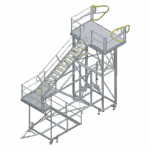


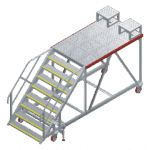


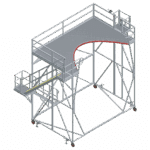


Ethiopian Airlines required an aircraft wi-fi access stand that could place technicians at the crown of its widebody aircraft for Wi-Fi dome installation and ongoing maintenance. The task formed part of the airline’s expansion of onboard connectivity on international routes, beginning with the A350 fleet and extending to other long-haul aircraft. SafeSmart supplied a mobile configurable dock for indoor and outdoor use across the A330, A350, B787, and B777 types. Push-button height adjustment and a powered loop guardrail helped the crew set the work position at the upper fuselage. AS 1657:2018 applied to the access arrangement.
Project context and required task
Ethiopian Airlines introduced onboard Wi-Fi on its A350 fleet using Ka-band satellite technology and reported plans to expand the service to other aircraft operating on long-haul routes. Installing the external dome required technicians to reach the aircraft crown, well above ordinary ground reach. The access method therefore had to suit upper fuselage work while giving the crew a defined way to approach the task with tools and parts.
The project was based in Addis Ababa and covered several widebody types. That fleet range mattered because crown height and fuselage geometry change between aircraft. A fixed height stand set up for one model would not address the broader fleet requirement without further equipment or a different configuration.
Why a standard access stand did not fit
The crew needed access for a defined installation task rather than general hangar reach. The stand had to move into position and operate inside or outside. It also needed to adjust to the crown height of several aircraft types and bring the guardrail interface towards the fuselage without treating one aircraft profile as universal.
The need to carry installation tools also changed the access decision. SafeSmart’s related A350 Wi-Fi access stand uses stair access so technicians can keep their hands available while moving to and from the work area. For this project, the solution combined a mobile base with powered adjustment instead of relying on separate fixed height stands for each aircraft.
The SafeSmart solution
SafeSmart supplied a mobile configurable dock for the airline’s A330, A350, B787, and B777 aircraft. The aircraft wi-fi maintenance access stand could be used in hangar conditions or outdoors, which gave the maintenance team one access concept for more than one operating operational setting.
A single button controlled height adjustment and the raising or lowering of the loop guardrail towards the aircraft crown. The related A350 Wi-Fi access stand also shows how foam buffering and protective skirts can be incorporated around a loop guardrail interface. Aircraft surface protection and guardrail clearance should be matched to the task during configuration.

How the aircraft WiFi access stand worked
- Mobile positioning across the fleet. The mobile dock could be moved to the aircraft that required installation work and positioned for crown access. Mobility also supported use across hangar and outdoor settings, for longer distances tow tug connection was included. Site procedures still needed to cover the travel path and parking position. They also had to define conditions for movement around aircraft.
- Powered height adjustment. Push-button adjustment changed the platform height for the selected aircraft. This allowed the crew to set the work level for different widebody types without treating one fixed elevation as suitable for every fuselage. The final position remained subject to the approved operating method and aircraft clearances.
- Loop guardrail positioning. The same control approach raised or lowered the loop guardrail to the crown. This created a task-specific interface at the upper fuselage. Any contact protection and stand-off distance had to match the approved configuration, so the access equipment did not damage the aircraft surface.
- Stair access for tools and parts. The aircraft Wi-Fi access stand uses stairs so personnel can move with their hands available for tools or parts. This is relevant to dome installation because the access route forms part of the work method. Optional lifting support and service outlets can be selected and delivered when the operational method requires them.
Project delivery and coordination
The access design followed the airline’s Wi-Fi rollout rather than platform height alone. Fleet types and work location were part of the requirement. The dome installation method also shaped the solution. The aircraft maintenance access stand therefore had to be reviewed as an interface with both the aircraft and the maintenance task.
AS 1657:2018 applied to the project. The standard did not make every possible setup compliant by product name alone. The approved configuration governed use. Operating instructions and site controls also applied. For a similar project, SafeSmart would need aircraft profiles, target work heights, movement routes and details of the tools or modules handled at platform level.
Outcomes for the airline maintenance team
- One configurable fleet access concept. The supplied mobile dock was suitable for four widebody aircraft types. That gave Ethiopian Airlines one configurable access concept across the listed fleet. Aircraft or modifications outside this project scope require their own configuration review.
- A set work position at the crown. Powered height control allowed the platform to be set for the selected aircraft, while the loop guardrail could be moved towards the crown. Together, those functions supported the Wi-Fi dome installation position described by the customer.
- Use in two operating settings. The mobile dock was suitable for indoor and outdoor operation. This supported maintenance planning when aircraft location changed, subject to the approved limits for ground condition and weather.
- Access connected to the installation task. The selected aircraft Wi-Fi access stand was planned around crown work, not generic height. That task-based approach is the main project lesson for other airlines preparing antenna or connectivity upgrades.
- An enduring solution. The functionality of the wi-fi access stand was delivered with proven self-contained sub-systems, driving down maintenance requirements ensuring availability of the equipment for the long-term.
What other aviation teams can apply
Crown access should be scoped from the maintenance task and the aircraft range before a stand is selected. Teams should document fuselage geometry, target work height, tow route and indoor or outdoor conditions. They should also record operational processes, including how technicians carry parts and whether lifting assistance is required.
Available product options can help define the required equipment, but final selection still needs a configuration review. Aircraft type and condition determine how an aircraft wi-fi access stand can be positioned. Local operating controls govern how it is used.
Plan crown access for your aircraft fleet
Send SafeSmart Aviation the aircraft types, crown work location, operating setting and handling requirements for your Wi-Fi installation programme. The team can review whether a standard A350 Wi-Fi access stand or another aircraft maintenance access stand configuration is suitable for the task.