

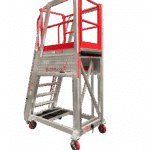


Western Sydney International Airport required airport ground support equipment for cargo door operations as the new airport prepared for full passenger services. SafeSmart supplied a 5 Step EasyRaise and a Chock and Cone Trolley for ground handlers. One height-adjustable platform performed the role of six individual platforms, reducing the number of access units in the operating area and leaving more airside space available. AS 1657 applied to the access platform scope.
A Shared Ground Support Fleet Needed Versatile Equipment
Western Sydney International Nancy-Bird Walton Airport was developed as a new airport for Western Sydney. Its operating model included Australia’s first airport-wide ground support equipment pooling operation, with a predominantly electric fleet shared across ground handlers. The pooled fleet covered airside functions including baggage handling and cargo loading.
Within that shared operating model, ground handlers needed cargo door access across several work heights without filling the airside area with separate fixed units. The equipment package also needed a dedicated way to move and organise the chocks and cones used around aircraft.
Why Six Fixed Platforms Did Not Suit the Airside Area
Covering the cargo door work heights with fixed-height stands would have required six individual platforms. Those units would have occupied more storage and staging space and given the crew more assets to position before each cargo operation.
The shared equipment model made equipment selection an operational question as well as a height question. Ground handlers needed one access unit that was straightforward to position and adjust, plus a dedicated trolley for moving and storing chocks and cones.
One EasyRaise and One Trolley Consolidated the Equipment Set
SafeSmart supplied the 5 Step EasyRaise as the adjustable cargo door platform. For WSI, one height-adjustable unit performed the work of six individual platforms. This consolidated the cargo door access requirement into one movable asset.
The equipment package also included the SafeSmart Chock and Cone Trolley. This aircraft wheel chock trolley gave the operating team a dedicated asset for moving and organising chocks and cones in the aircraft stand area. Together, the two products addressed cargo door access and the handling of associated ground items.

How the Equipment Supported Cargo Door Operations
- Height Adjustment Covered Six Work Positions. The EasyRaise platform adjusted to the height required for each cargo door task. One supplied unit therefore served the six work positions that would otherwise have required separate platforms. The adjustment range consolidated the access requirement without adding more equipment to the airside area.
- A Defined Five Step Route to the Platform. The 5 Step EasyRaise gave ground handlers a defined stair route from ground level to the work platform. The platform height could then be set for the cargo door position while the access route remained consistent.
- A Dedicated Trolley Organised Chocks and Cones. The Chock and Cone Trolley kept aircraft ground items together on one purpose-built asset. Ground handlers could move and store the chocks and cones as a set rather than managing loose items across the operating area.
- Fewer Assets Left More Airside Space Available. Replacing six individual platforms with one adjustable platform reduced the equipment count for the project. The smaller equipment footprint left more airside space available and simplified cargo-door operations.
Coordinating the Equipment with the Airport Opening
SafeSmart worked with the project team to match the equipment to the cargo door work heights, shared ground support model and airport opening programme. The resulting package combined adjustable access with organised chock and cone handling.
AS 1657 was the compliance reference for the access platform. Final drawings and product documents captured the delivered arrangement, while commissioning, airside training and movement procedures established how ground handlers would adjust, move and park the equipment.
One Adjustable Platform Replaced Six Fixed Units
- One Platform Replaced Six Individual Units. For WSI, one adjustable platform performed the work of six individual platforms. Ground handlers had fewer cargo door access units to store, move and position.
- More Airside Space Remained Available. With fewer platforms in the equipment mix, more space remained available in the airport area. The ground handling team gained a simpler equipment footprint around cargo operations.
- The Equipment Area Was Cleaner. Consolidating the access requirement and providing a dedicated Chock and Cone Trolley created a cleaner equipment area. The access platform, chocks and cones each had a defined place within the operating setup.
- The Equipment Suited the Shared Fleet Model. 5The height-adjustable platform suited the shared GSE model because one unit served several cargo door positions. The EasyRaise and Chock and Cone Trolley gave the pooled operation two defined assets for access and aircraft ground-item handling.
How to Plan Airport Ground Support Equipment
Australian airport ground support equipment projects should start with the aircraft task and operating model. Record the cargo door heights, aircraft mix, storage location and movement route, then define who adjusts the platform and how the unit is parked between uses.
To consolidate access assets, map every cargo door height and aircraft type against the platform adjustment range. This identifies how many fixed stands an adjustable platform can replace and where a separate access unit remains necessary.
Configure Airport Ground Support Equipment Around the Task
Send SafeSmart the aircraft types, cargo door heights, airside movement route and storage plan. The team can configure a 5 Step EasyRaise and Chock and Cone Trolley around the airport’s cargo handling operation.